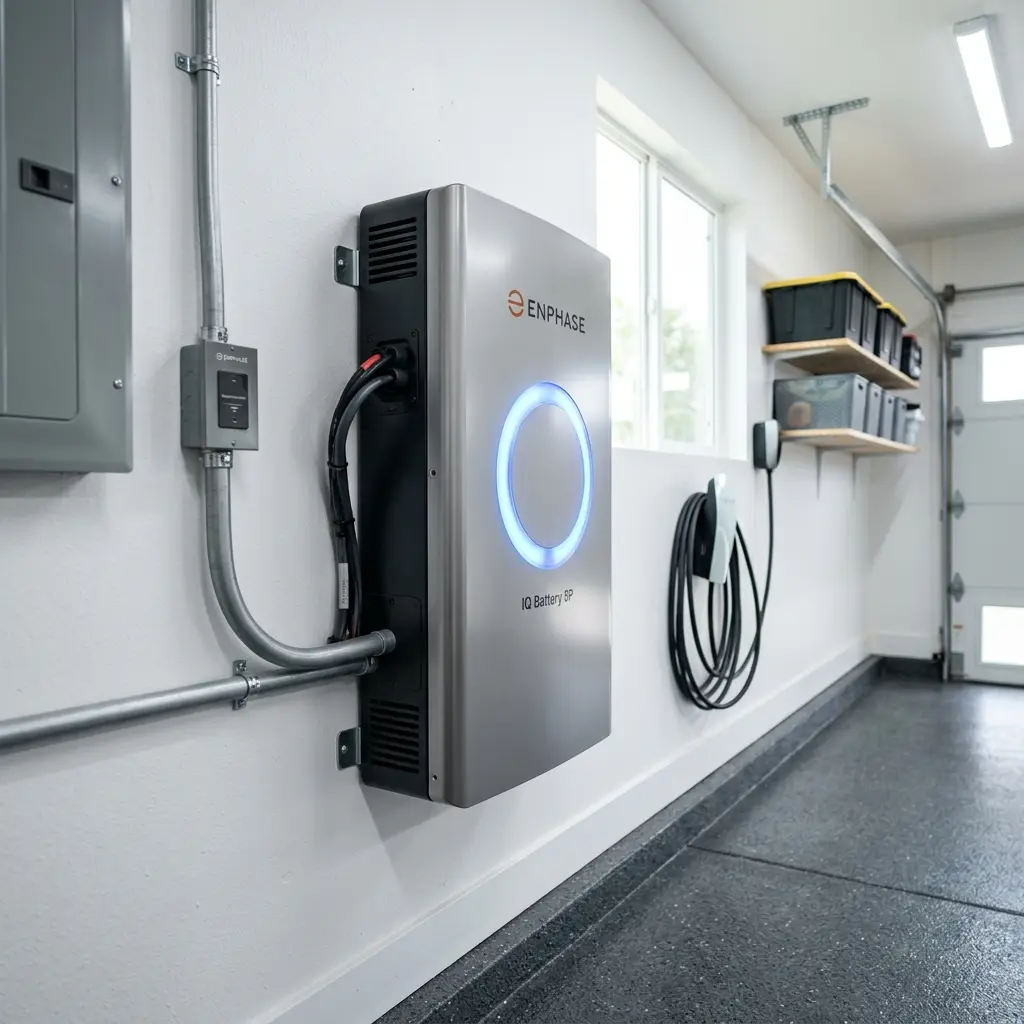
Home batteries are the fastest-growing category in energy storage for private individuals in 2026 — driven by power tariffs, volatile electricity prices, and lower battery costs. But which systems are best, what do they cost net, and how quickly do they pay off? Here is the full picture.
Why get a home battery in 2026?
Three strong reasons make home batteries extra profitable right now:
1. Power tariffs — shave the peaks Ellevio and Vattenfall have introduced power tariffs that charge per kW of maximum power per month (approx. 45–57 SEK/kW). A battery that charges at night and delivers electricity during the morning rush hour (06:00–09:00) can lower your peak power by 3–6 kW = 170–340 SEK/month savings on the grid fee alone.
2. Spot price arbitrage Buy electricity when the Nordpool price is low (often negative prices at night) and use the battery during the most expensive hours. With an hourly price contract (Tibber, Vattenfall Direkt), the arbitrage profit can amount to 200–600 SEK/month depending on capacity and price variations.
3. Support services — rent out to the power grid Via services like Checkwatt, you can rent out your battery capacity to Svenska Kraftnät for frequency regulation. Typical compensation: 300–800 SEK/month for a 10 kWh system, without you even noticing it.
Prices of Home Batteries in 2026
Prices have fallen by about 30% compared to 2022. Current target prices before the Green Technology deduction:
| System | Capacity | Material Price | Installation | Total Gross |
|---|---|---|---|---|
| BYD HVS 10.2 | 10.2 kWh | ~65,000 SEK | ~15,000 SEK | ~80,000 SEK |
| Huawei LUNA S1 | 10 kWh | ~60,000 SEK | ~15,000 SEK | ~75,000 SEK |
| Sonnen eco 10 | 10 kWh | ~80,000 SEK | ~12,000 SEK | ~92,000 SEK |
| Tesla Powerwall 3 | 13.5 kWh | ~75,000 SEK | ~18,000 SEK | ~93,000 SEK |
| SolarEdge Home 10 | 10 kWh | ~58,000 SEK | ~15,000 SEK | ~73,000 SEK |
The Green Technology Deduction — 50% Discount
Battery storage qualifies for a 50% Green Technology deduction (Grön Teknik) on both materials and labor. The deduction is made directly on the invoice by the installer.
| System | Gross Price | Green Tech (-50%) | Your Final Cost |
|---|---|---|---|
| BYD HVS 10.2 | 80,000 SEK | -40,000 SEK | ~40,000 SEK |
| Huawei LUNA S1 | 75,000 SEK | -37,500 SEK | ~37,500 SEK |
| Tesla Powerwall 3 | 93,000 SEK | -46,500 SEK | ~46,500 SEK |
The maximum deduction is 50,000 SEK per person per year. Couples can utilize up to 100,000 SEK.
Profitability — How long is the payback time?
Calculated for a 10 kWh system, Ellevio customer in Stockholm:
| Revenue Source | Savings/Month | Savings/Year |
|---|---|---|
| Peak shaving | 200–340 SEK | 2,400–4,080 SEK |
| Spot price arbitrage | 200–500 SEK | 2,400–6,000 SEK |
| Checkwatt support services | 300–700 SEK | 3,600–8,400 SEK |
| Total | 700–1,540 SEK | 8,400–18,480 SEK |
With a net cost of ~38,000 SEK and savings of ~13,000 SEK/year → payback approx. 3–4 years.
BYD vs. Huawei vs. Tesla — Which is best?
| Feature | BYD HVS | Huawei LUNA | Tesla Powerwall 3 |
|---|---|---|---|
| Chemistry | LFP (Lithium Iron Phosphate) | LFP | LFP |
| Lifespan | 6,000 cycles (10-year warranty) | 6,000 cycles (10 years) | 10-year warranty |
| Max output power | 5 kW | 5 kW | 11.5 kW |
| Off-grid support | ✅ | ✅ | ✅ |
| Checkwatt compatible | ✅ | ✅ | ❌ (not yet) |
| Modularity | Yes (+2.5 kWh/module) | Yes (+5 kWh) | No |
Our recommendation: BYD HVS offers the best balance between price, performance, and compatibility with support services. Tesla Powerwall 3 is better for those who want high instantaneous power (e.g., electric heating).
Frequently Asked Questions about Home Batteries
Do I need solar panels to have a battery? No. You can charge the battery directly from the grid during the night's low hourly prices and use it during the day/evening. The combination of solar panels + battery yields the best return, but it is not necessary.
What happens during a power outage? Most systems (BYD, Huawei, Tesla) support "black-out mode" — automatic transition to off-grid during a power outage. The battery powers essential equipment (lighting, fridge/freezer, WiFi) until the grid comes back.
Is 10 kWh enough for a day? A normal villa consumes 10–20 kWh per day (winter). 10 kWh covers roughly half the daily consumption excluding heating. Combine with heat pump optimization and solar panels for full energy independence.
Need help with this?
Get a free quote from our certified electricians. We usually respond within 24 hours.
Free QuoteInterested in battery storage?
We install BYD, Huawei LUNA, and SolarEdge Home Batteries in Greater Stockholm. The Green Technology deduction (50%) is handled directly on the invoice. Contact us for a free home visit and sizing.