Electricity prices in 2026 remain one of the most important topics for Swedish homeowners. The Nordpool price can swing from 2 öre to over 340 öre per kWh in a single day. The difference is enormous and affects your electricity bill more than most people realize. The good news is that most villas, with the right contract, equipment, and habits, can lower their electricity bill by 20 to 40 % without sacrificing comfort.
Understand Your Electricity Bill: Three Parts You Pay For
Before we talk solutions, it is important to understand that your electricity bill consists of three separate parts:
| Part | What You Pay | Can You Influence It? |
|---|---|---|
| Electricity Trade | Nordpool price and electricity retailer's margin | ✅ Yes, by choice of contract |
| Grid Fee | Fixed fee, variable consumption, and potential power tariff | ✅ Partially, using smart control systems |
| Energy Tax and VAT | State energy tax and 25 % VAT | ❌ No |
Most people focus on the electricity retailer, but the grid fee with its power tariff is often just as big a problem in 2026.
1. Switch to an Hourly Price Contract
If you still have a fixed electricity contract, you pay a risk premium to the electricity company for taking the price risk. During 2025, the average price for variable hourly price contracts was lower than fixed prices in electricity bidding zones 3 and 4 for most months.
With an hourly price contract, you pay exactly the Nordpool price for the current hour. It requires you to be active and adapt your consumption, or install smart technology that does it for you.
Best apps to track the hourly price:
- Tibber shows price forecasts for the next 24 hours and integrates with EV chargers, heat pumps, and smart plugs
- Elspot provides a clean price overview without having to change electricity retailers
- Your own electricity supplier's app
2. Shift Consumption to Cheap Hours
Electricity in Sweden is generally cheapest at these times:
- 00:00 to 06:00 with low load on the grid and prices often under 10 öre per kWh
- 10:00 to 14:00 when high solar energy supply in Central Europe pushes prices down on sunny days
Feel free to shift these appliances to cheap hours:
- Dishwasher and washing machine by using the delay timer present in all modern machines
- EV charging via apps from Tibber, Zaptec, or Easee with built-in smart scheduling
- Water heater by installing a smart relay, such as Shelly or Tibber Pulse, which controls the heater automatically
- Tumble dryer, which is the easiest appliance to shift manually
Calculation example: A washing machine at 0.8 kWh run at 03:00 at a price of 5 öre per kWh costs 4 öre. The same wash at 18:00 at a price of 200 öre per kWh costs 1.60 SEK. Thirty washes per month equals 48 SEK compared to 1.20 SEK, resulting in a difference of almost 47 SEK just for the washing machine.
3. Smart Control of the Heat Pump
Heating often accounts for 60 to 70 % of a homeowner's total electricity consumption. This is where the big savings are found.
Modern heat pumps from Nibe, Thermia, and Bosch can integrate directly with Tibber or Nordpool's API and automatically lower the indoor temperature during expensive hours and heat up during cheap ones through heat storage in the building and underfloor heating.
If your heat pump lacks this feature, Smista Elinstallation can install external control systems such as Ngenic Tune or Thermia Online, which add price-controlled operation without needing to replace the heat pump. The cost is between 3,000 and 8,000 SEK including installation, and the payback period is often under 2 years.
4. Manage the Power Tariff: A Critical Point in 2026
As of 2025, the majority of Swedish electricity grid companies have introduced power tariffs. This means your grid fee is partially based on your highest power peak during the month, instead of solely on your total consumption.
A typical calculation is based on the average of the three highest power peaks in kilowatts during the month. Ending up in a higher power tier can cost 200 to 800 SEK extra per month.
How to cut power peaks:
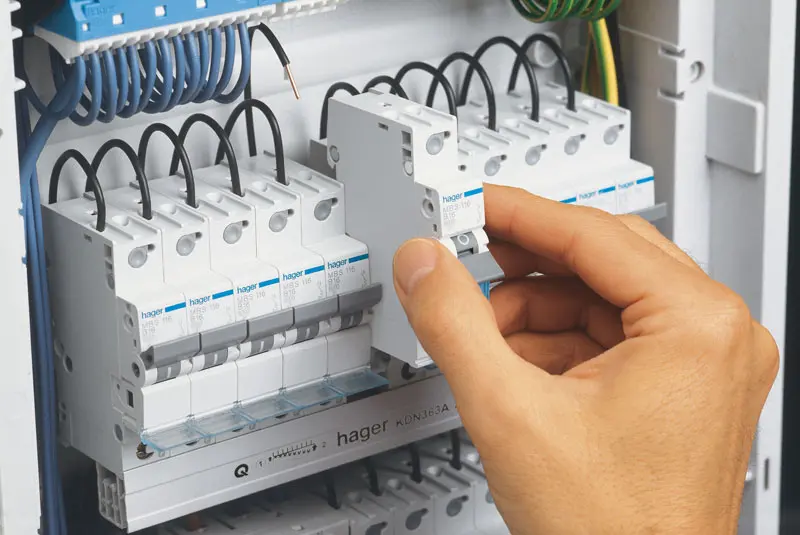
- Load balancing on the EV charger automatically reduces charging power when the house draws a lot of electricity simultaneously, such as when the stove, heat pump, and EV charger are running at the same time. Smista Elinstallation installs this for Easee, Zaptec, and Charge Amps.
- Home batteries such as Huawei Luna or Tesla Powerwall charge at night and cut peaks during the day. This involves a higher purchase price but is very effective against power tariffs.
- Smart thermostat or control system prevents the heat pump from starting at the worst possible moment, such as when the stove and washing machine are running at full power.
5. Solar Panels and Battery: The Right Calculation in 2026
With current solar panel prices and the tax deduction for green technology, the payback period in southern Sweden is around 8 to 12 years with an hourly price contract. In combination with a home battery that cuts the power tariff, the calculation can become even more attractive.
Note: Solar panels produce the most during summer when the Nordpool price is generally lowest. Therefore, do not expect the price you sell surplus electricity for to cover the full production cost. The real benefit lies in the electricity you consume yourself directly from your own panels.
Need help with this?
Get a free quote from our certified electricians. We usually respond within 48 hours.
Free QuoteDo you want to automate your electricity savings?
Smista Elinstallation installs load balancing systems, smart thermostats, EV chargers compatible with Tibber, and control units from Ngenic, meaning everything that automatically optimizes your consumption according to the Nordpool price. Most systems qualify for the ROT deduction of 30 % or the deduction for green technology of up to 50 %. Contact us for a free consultation.