When you install an EV charger at home, a new, heavy consumer is added, often 7 to 22 kW over several hours. Without load balancing, you risk constant power outages if you simultaneously cook, run the tumble dryer, or heat the house. Here is everything you need to know about load balancing.
What is load balancing?
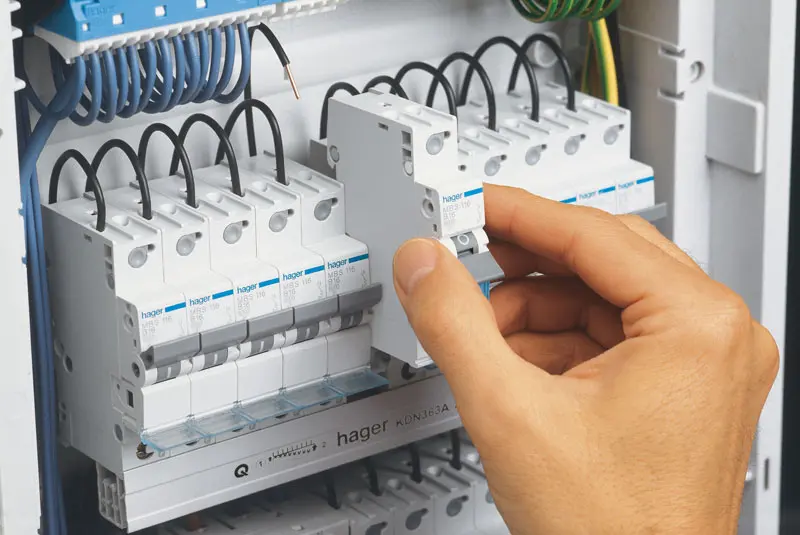
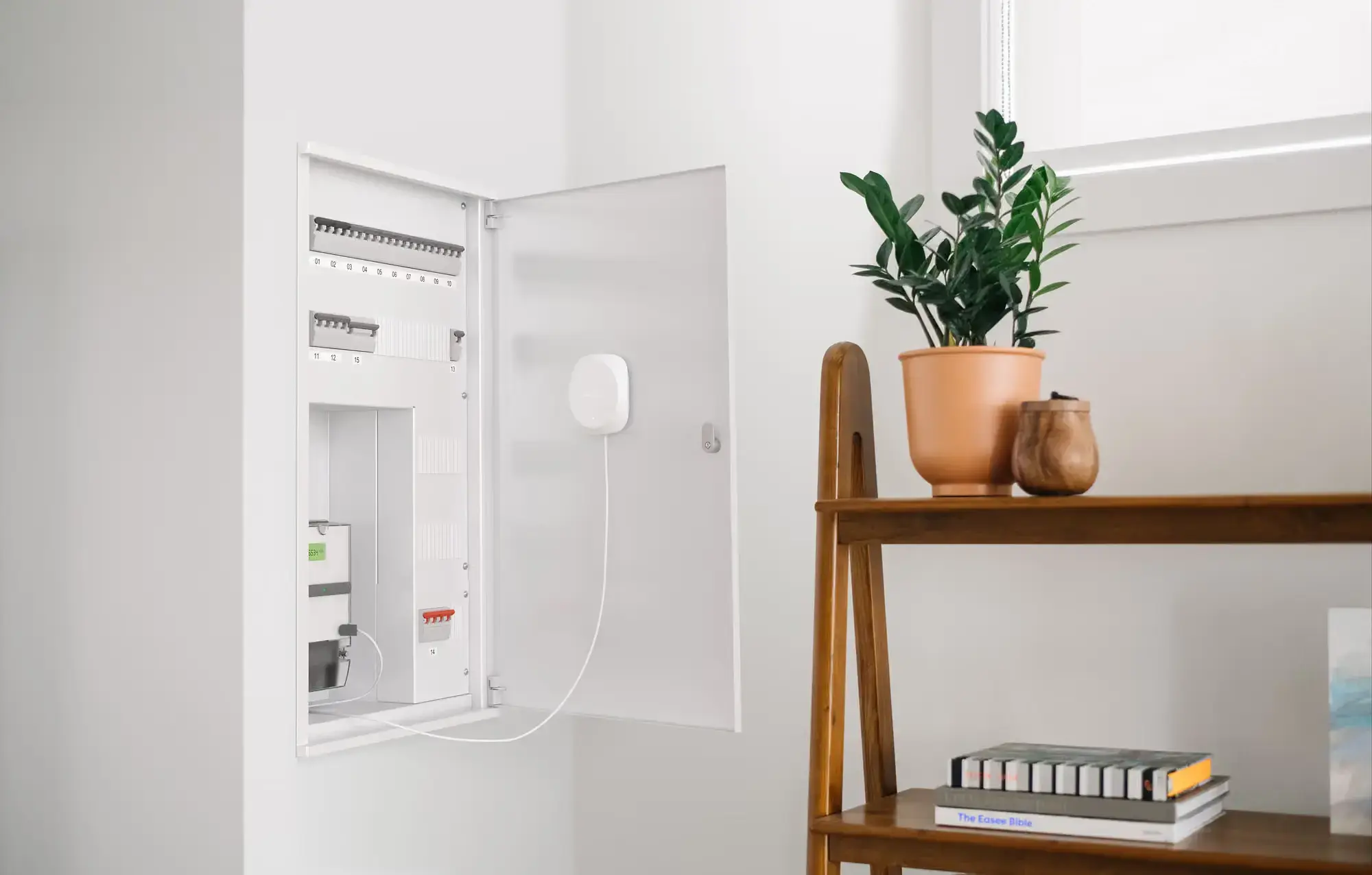
A load balancer, also called a power monitor or energy meter, is a small device connected to or mounted in the electrical distribution panel. It measures in real-time how much electricity the house consumes and communicates directly with the EV charger.
The principle is simple:
- If the house draws a lot of electricity, the EV charger automatically lowers the charging power
- If the house has low consumption, such as during the night or weekend, the EV charger charges the car at maximum power
Everything happens in milliseconds without you noticing it.
Why is load balancing necessary?
With the new power tariffs that grid companies have introduced in recent years, load balancing is more important than ever. You now pay for your highest peak power per month.
Without load balancing, a conceivable worst-case scenario:
| Situation | Power |
|---|---|
| EV Charger (11 kW) + stove (6 kW) + heat pump (3 kW) | 20 kW total |
| With 16A main fuse (max ~11 kW) | 💥 The main fuse trips |
| Peak power fee (Ellevio) | 20 × 57 SEK = 1,140 SEK extra that month |
With load balancing — same situation:
| Situation | Power |
|---|---|
| Stove (6 kW) + heat pump (3 kW) = 9 kW | The load balancer detects it |
| The EV charger reduces to 16A max - 9 kW = ~2 kW | No outages |
| Peak power = 9 kW | Half the grid fee |
Product Comparison: Popular Load Balancing Solutions
| Product | Type | Compatible EV Chargers |
|---|---|---|
| Easee Equalizer | Wireless (WiFi / P1) | Easee Charge Lite, Easee Charge Up |
| Zaptec Sense | Wireless (WiFi / P1) | Zaptec Go, Zaptec Go 2 |
| Charge Amps Amp Guard | Wireless (WiFi / P1) | Charge Amps Dawn |
| Tibber Pulse | Wireless (P1 / API) | Easee & Zaptec via Tibber |
The Green Technology tax deduction of 50% applies to the entire load balancing system.
Wired or Wireless Load Balancing
Our recommendation is wireless load balancing. It provides smoother installation, lower labor cost, and easy integration with smart home apps like Tibber and Zaptec.
Wireless (WiFi/P1/API) — Our recommendation
- ✅ Easier installation and lower labor cost
- ✅ Integrates directly with apps like Tibber and Zaptec
- ✅ No cable routing required between electrical panel and charger
- Best for: Easee Equalizer, Zaptec Sense, Tibber Pulse, and most single-family homes
Wired (CT sensor + cable)
- ✅ Stable in environments completely without a wireless network
- ❌ Requires cable routing from electrical panel to EV charger
Installation of Load Balancing
If load balancing is installed simultaneously with the EV charger, the entire mounting and configuration is handled in a single continuous process. Both the EV charger, the load balancer, and the installation labor are covered by the Green Technology tax deduction of up to 50%.
Do I have to have load balancing?
It is not a legal requirement, but we always recommend it. The reasons are as follows:
- Power tariffs: Without load balancing, you risk hundreds of extra SEK every month.
- Fuse capacity: Most single-family homes have a 16 to 25 A main fuse, which is not enough for the EV charger and house at full power simultaneously.
- Green technology: Load balancing qualifies for a 50% deduction just like the EV charger itself.
Frequently Asked Questions about Load Balancing:
Does load balancing work with solar panels?
Yes, advanced systems like Easee Equalizer and Zaptec Sense can prioritize charging the car with self-generated solar power and only supplement with grid electricity when the sun is not enough. This is called self-production or solar charging.
Can I add load balancing to an existing EV charger?
Often yes. If your EV charger has a Wi-Fi connection and supports dynamic power control, you can often add, for example, Tibber Pulse or Easee Equalizer without replacing the EV charger.
What happens if the Wi-Fi network goes down during wireless load balancing?
Most systems fall back to a predefined safe power mode, such as 6 A, until communication is re-established.
Need help with this?
Get a free quote from our certified electricians. We usually respond within 48 hours.
Free QuoteDo you want load balancing installed?
We install complete EV charger packages with load balancing in Greater Stockholm. The Green Technology deduction (50%) is deducted directly on the invoice. Contact us for a free price quote.