Floor heating makes the bathroom luxurious, dries moisture quickly, and prevents water damage. But when faced with the choice: should you choose electric floor heating (heating cables) or water-borne floor heating?
Water-borne Floor Heating
Connected to your existing water-based heating system (e.g., district heating or geothermal heat pump).
- Pros: Very low operating costs when connected to a heat pump. A good choice for the environment.
- Cons: Expensive and complicated installation that adds significant height (requires a thicker floor structure). A problem is that the heat turns off in summer when the heat pump enters summer mode, leaving the bathroom floor cold.
Electric Floor Heating (Heating cables)
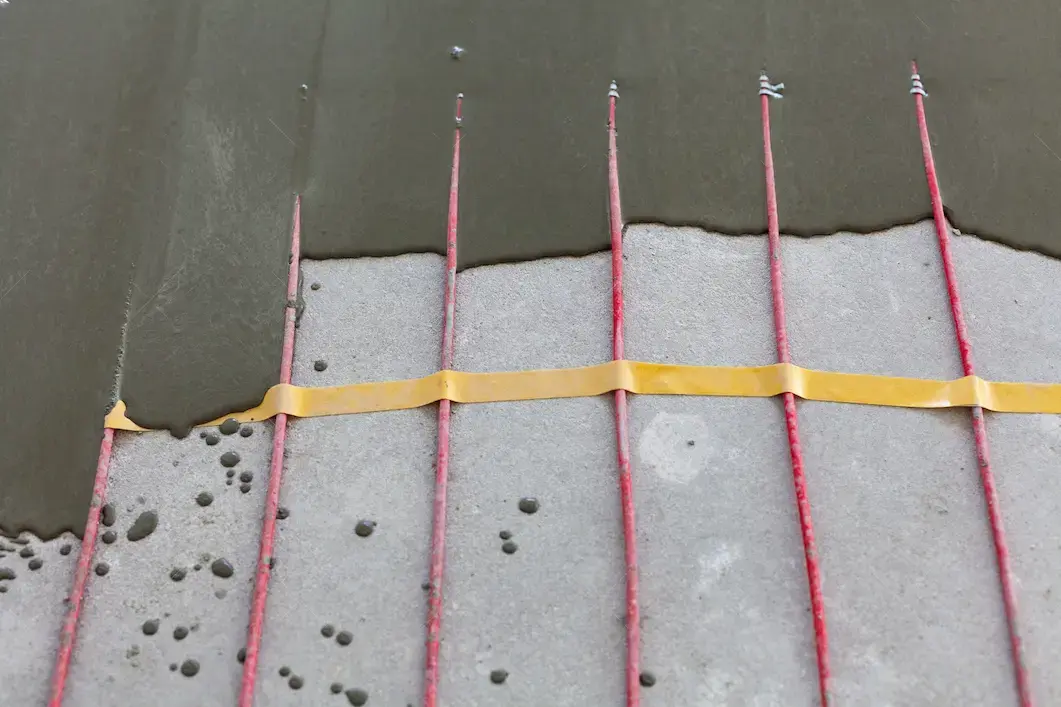
A heating cable is cast into the self-leveling compound just beneath the tiles. Always installed by an electrician.
- Pros: Low installation cost. Adds minimal height to the floor (perfect for renovations). Can be run year-round, independently of the house's main heating system, providing warm feet even in July. Fast heating.
- Cons: More expensive to operate as it uses household electricity (depending on electricity prices).
Our Recommendation
For new home builds, water-borne is usually standard. But for bathroom renovations in older villas and apartments, electric floor heating is undoubtedly the most popular and flexible choice. By installing a modern smart thermostat, you can also control the heat so it only runs when you are actually in the bathroom.
Frequently Asked Questions about Floor Heating
Can I install floor heating under laminate or wood? Yes, but check that the floor material tolerates 27 °C (most modern laminates and glued wooden floors do). Tiles and limestone always work best.
Who installs the floor heating, an electrician or a tiler? The electrician installs the heating cable and connects the thermostat. The tiler applies the self-leveling compound and tiles on top. Book the electrician before the tiler.
How long is the warranty on the heating cable? We primarily work with quality systems from Devi and Raychem. Because Smista Elinstallation is a certified installer, the manufacturer provides a 20-year warranty on the cable. The thermostat typically comes with a 2 to 5 year warranty.
Need help with this?
Get a free quote from our certified electricians. We usually respond within 48 hours.
Free QuoteAre you renovating your bathroom?
Smista Elinstallation lays your floor heating and connects a smart thermostat. We coordinate with your tiler and ensure everything is professionally executed with warranties. Contact us for a quick quote.