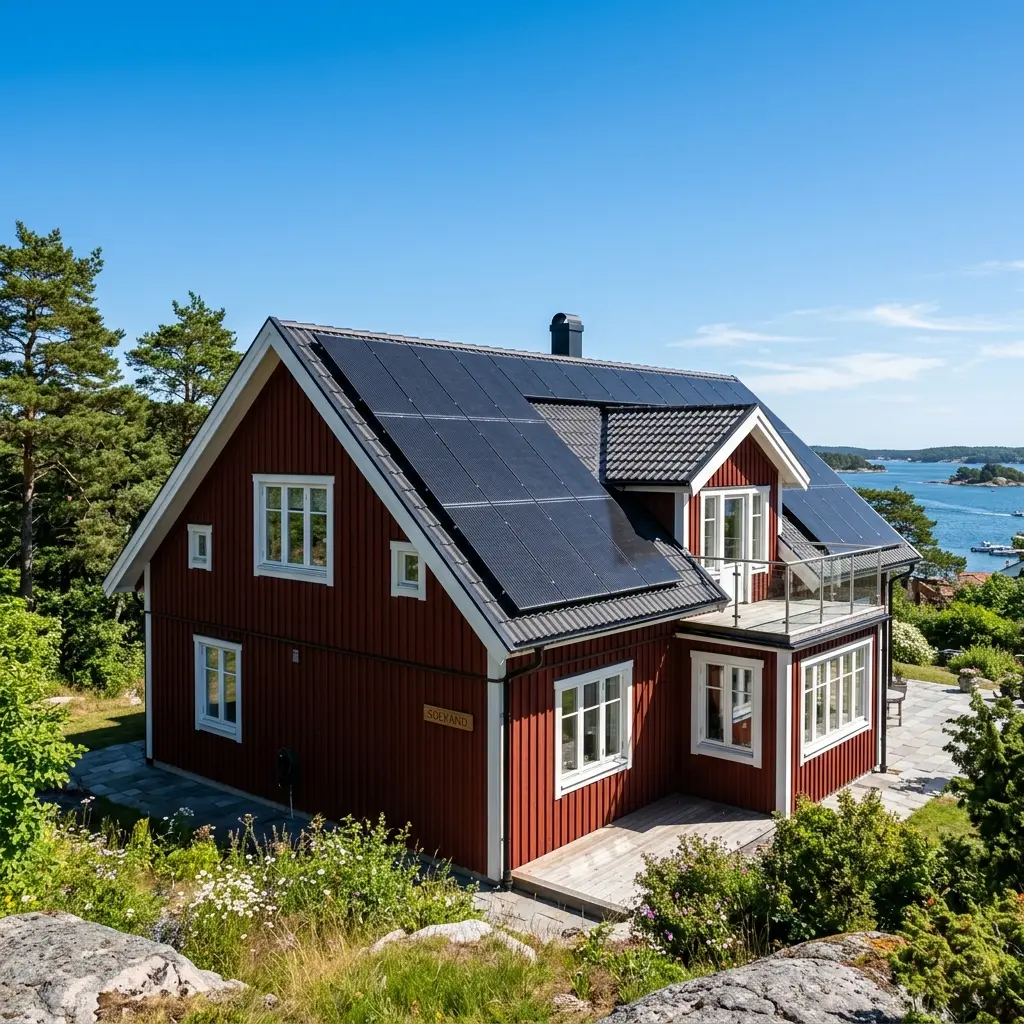
Interest in solar panels is at a record high in 2026. Lower panel prices, high electricity prices, and an improved Green Technology deduction mean that payback times are now under 8 years for most villa roofs in the Stockholm region. Here is the entire process — from decision to finished facility.
What do solar panels on a villa cost in 2026?
The price depends on the size of the facility, the complexity of the roof, and whether you choose a battery. Target prices for a normal villa in Stockholm before deductions:
| System Size | Capacity | Annual Production (Stockholm) | Price (Gross) |
|---|---|---|---|
| Small | 5 kWp | 4,500–5,000 kWh | 80,000–110,000 SEK |
| Medium | 10 kWp | 9,000–10,000 kWh | 140,000–180,000 SEK |
| Large | 15 kWp | 13,000–15,000 kWh | 200,000–250,000 SEK |
The Green Technology Deduction (20%) and ROT (30%)
Solar panels are covered by the Green Technology deduction of 20% of the entire invoice (materials + labor). Furthermore, the ROT deduction of 30% applies to electrical installation work. The deductions can be combined — but ROT and Green Technology cannot be claimed on the same work step.
Calculation example — 10 kWp system:
| Item | Gross Cost | Green Tech (-20%) | ROT on labor (-30%) | Your Cost |
|---|---|---|---|---|
| Panels & inverter | 100,000 SEK | -20,000 SEK | — | 80,000 SEK |
| Installation (labor) | 60,000 SEK | — | -18,000 SEK | 42,000 SEK |
| Total | 160,000 SEK | ~122,000 SEK |
The maximum Green Technology deduction is 50,000 SEK per person/year.
How Profitability Works — What do you earn?
A 10 kWp system in Stockholm produces approx. 9,500 kWh/year. Depending on how you use the electricity:
| Category | Amount/Year |
|---|---|
| Self-consumption (avoid buying electricity at 1.80 SEK/kWh) | ~8,550 SEK |
| Sale of surplus electricity (0.60 SEK/kWh) | ~1,000 SEK |
| Electricity certificates and grid benefit | ~500 SEK |
| Total savings/revenue | ~10,050 SEK/year |
With a net cost of ~122,000 SEK → payback ~12 years (without battery) or ~8–9 years with optimization and battery.
Step-by-Step: From Decision to Commissioning
Step 1 — Pre-study and Quote (1–2 weeks)
We inspect the roof's condition, inclination, compass direction, and shading. A south-facing position with a 30–45° inclination is optimal, but east/west roofs yield about 80% of max production.
Requirements for an approved roof:
- Roofing material: Concrete, tile, sheet metal, or felt roofs work
- Age: Under 20 years (older roofs should be reviewed before installation)
- Load capacity: Solar panels weigh approx. 12–15 kg/m² — most roofs can handle this
Step 2 — Pre-notification to the Grid Company
The installer sends a pre-notification (föranmälan) to your electricity grid company (Ellevio, Vattenfall Elnät). They check that the local grid can handle your future production. Response time: 2–8 weeks.
Step 3 — Installation (2–4 days)
- Scaffolding is erected
- Mounts and aluminum rails are drilled into the roof (with sealing against leaks)
- The solar panels are lifted up and locked into the rails
- DC cables are routed down the eaves to the inverter
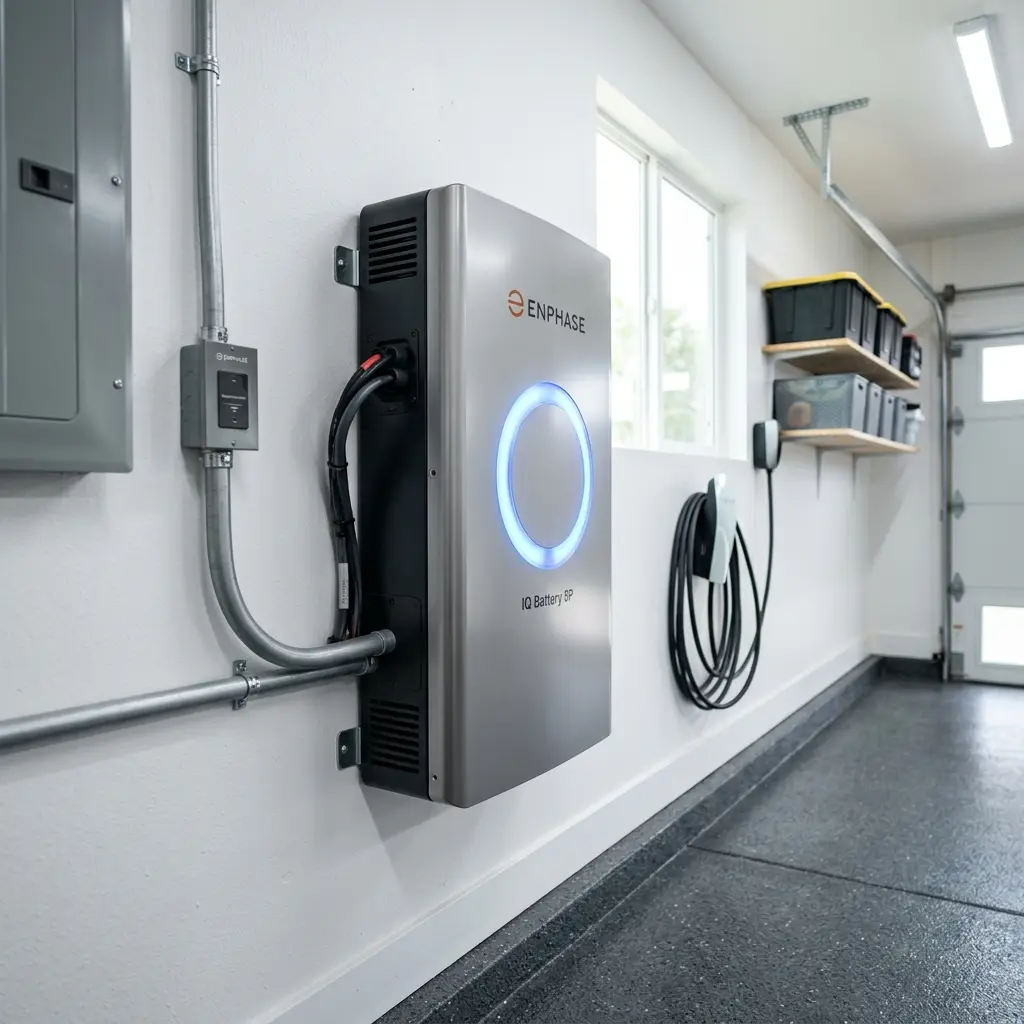
- The inverter is installed (usually in a garage or utility room)
- Electrical installation: the inverter is connected to the electrical panel
Step 4 — Commissioning and Meter Change
The electrical installation company makes a completion notification (färdiganmälan) to the grid company. They replace your electricity meter with a bi-directional meter that can measure both consumption and feed-in. From the commissioning day, you can sell surplus electricity.
Do I need a building permit?
In most cases, no. Solar panels that follow the angle of the roof and do not protrude more than 20 cm above the roof pitch are normally exempt from building permits. But always check with your municipality — regulations vary, and certain zoning plans (culturally historical areas) may have restrictions.
Frequently Asked Questions about Solar Panels
Do solar panels work in Stockholm with the cloudy climate? Yes. Solar panels require daylight, not direct sun. Stockholm gets about 1,750–1,900 sunshine hours/year compared to Malmö's 1,900–2,100. The difference in annual production is approx. 5–10%. Sweden is actually one of Europe's better countries for solar panels — better than, e.g., northern Germany.
Can I sell my surplus electricity back to the grid? Yes — since 2023, grid companies are obligated to receive and pay for your surplus electricity. Typical compensation is the Nordpool spot price minus the grid company's feed-in fee, approx. 0.40–0.80 SEK/kWh depending on the time.
What happens to the solar panels during a power outage? A standard inverter shuts down during a power outage (for the safety of grid workers). If you want backup power during an outage, a home battery with "black-out mode" is required — e.g., BYD HVS or Tesla Powerwall 3.
Need help with this?
Get a free quote from our certified electricians. We usually respond within 24 hours.
Free QuoteTime for Solar Panels on Your Villa?
Smista Elinstallation delivers complete solar panel systems in Greater Stockholm — from pre-notification to commissioning. Green Technology deductions and ROT are handled directly on the invoice. Book a free roof inspection.